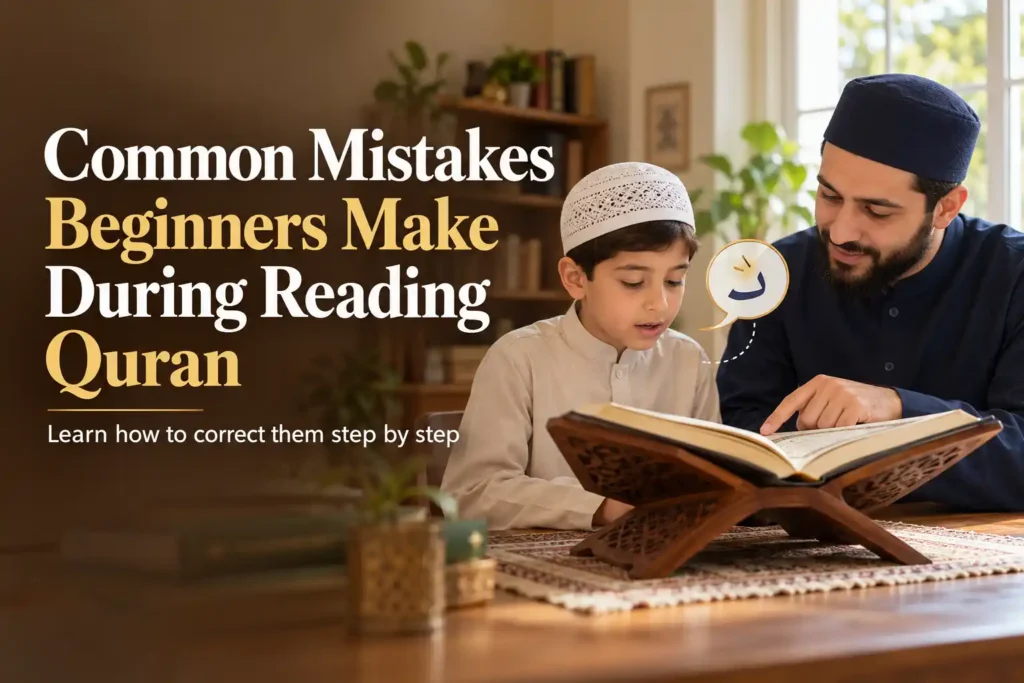
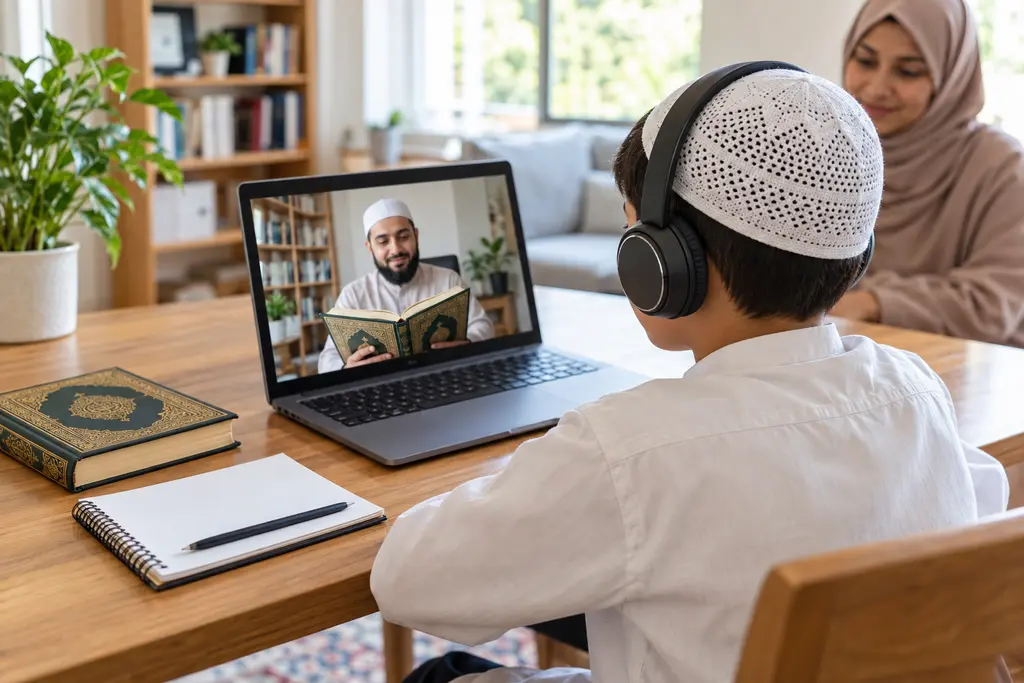
Choosing the best online Quran teacher for your child is an important decision for every Muslim parent. A good teacher can help your child build a lifelong connection with the Quran, learn correct recitation, develop good Islamic manners, and feel confident in every lesson. The wrong choice, however, can leave a child confused, discouraged, or uninterested in continuing their Quran learning journey.
For families living in the USA, UK, Canada, Australia, Europe, and other parts of the world, online Quran classes offer a practical way to provide Islamic education from home. Yet, not every online teacher or academy offers the same level of teaching, care, communication, and child-focused support.
This guide will help you choose the best online Quran teacher for your child with confidence and clarity.
Why Choosing the Right Online Quran Teacher Matters
Children learn differently from adults. They need a teacher who is patient, encouraging, clear in communication, and able to make each lesson feel comfortable. A child may be learning Arabic letters for the first time, improving Quran recitation, beginning Tajweed, or working towards Quran memorization. In every case, the teacher’s approach can make a lasting difference.
The best online Quran teacher for your child should not simply listen to recitation and correct mistakes. A good teacher should understand the child’s level, explain lessons in an age-appropriate way, encourage regular practice, and help parents understand their child’s progress.
Online learning can be highly effective when the classes are organised, interactive, and taught one-to-one. It can also save families travel time and allow children to learn in the comfort and safety of their own home.
1. Check the Teacher’s Quran Qualifications
The first thing parents should ask about is the teacher’s qualification. A Quran teacher should have strong knowledge of Quran recitation, Tajweed rules, and the ability to teach children properly. The best online Quran teacher for your child should have sound Quran knowledge and the ability to teach young learners patiently.
Look for a teacher who has studied Quran recitation with Tajweed and has experience teaching students at different levels. If your child is learning advanced Tajweed, Quran memorization, or Quran translation, make sure the teacher has the right knowledge for that specific subject.
A qualified teacher understands the difference between a child who is just starting Noorani Qaida and a child who can already read the Quran but needs help with pronunciation. They should not use the same teaching method for every student.
At Fatir Online Quran Academy, children can begin with structured Quran Recitation Classes and move forward step by step according to their individual level.
2. Make Sure the Teacher Can Teach Tajweed Clearly
Correct Quran pronunciation is one of the most important parts of Quran learning. Tajweed helps children pronounce Arabic letters properly and recite the Quran with greater accuracy, confidence, and respect.
A teacher should be able to explain mistakes gently and clearly. For example, they should help a child understand the correct sound of Arabic letters, where the sound comes from, when to stretch a letter, and when to pause during recitation.
Parents do not need to be experts in Tajweed themselves. However, they should ask whether the teacher focuses on correct pronunciation from the beginning. Small mistakes can become habits if they are not corrected early.
If your child already reads the Quran but needs to improve pronunciation, a dedicated Tajweed-ul-Quran Course may be the right next step.
3. Choose One-to-One Classes for Personal Attention
One-to-one learning is an important feature for parents searching for the best online Quran teacher for your child. Group classes may work for some children, but one-to-one classes are often more effective for Quran learning. In a private class, the teacher can focus fully on one child’s recitation, understanding, pace, and confidence.
A child who is shy may hesitate to read aloud in front of other students. A child who learns quickly may become bored if the group moves slowly. Another child may need more repetition and encouragement before moving to the next lesson. One-to-one learning gives the teacher the flexibility to support each child properly.
Personalised classes also allow parents to choose a timetable that works around school, homework, family commitments, and weekends. This is especially helpful for Muslim families living in countries where Islamic schools or local Quran teachers may not be easily available.
4. Look for a Teacher Who Is Patient With Children
Knowledge is essential, but patience is equally important. Children can make repeated mistakes, lose concentration, feel nervous, or need extra time to understand a new lesson. A good teacher should remain calm, respectful, and encouraging throughout the class.
Before enrolling, ask how the teacher handles children who are beginners or who struggle with reading Arabic. The teacher should motivate the child, not make them feel embarrassed about mistakes.
A positive teacher can help a child look forward to Quran class. They should praise genuine effort, set achievable goals, and make the learning journey feel manageable.
The best online Quran teacher for your child is someone who combines Quran knowledge with a kind and child-friendly teaching style.
5. Check Whether Male and Female Teachers Are Available
Every family has different preferences. Some parents prefer a male teacher for their son, while others may prefer a female teacher for their daughter. Some older female students may also feel more comfortable learning with a qualified female Quran teacher.
An academy that offers both qualified male and female teachers gives families more flexibility. What matters most is that the teacher is professional, experienced, respectful, and suitable for the student’s age and learning level.
When speaking with an academy, clearly share your preference so the right teacher can be assigned from the beginning.
6. Ask About Child Safety and Parent Communication
When children learn online, parents should feel confident about safety, communication, and professionalism. A trustworthy academy should have clear procedures for scheduling classes, communicating with parents, and monitoring student progress.
Parents should know which platform will be used for classes and how the academy manages lesson times, teacher changes, missed classes, and feedback. Classes may be conducted through platforms such as Microsoft Teams, Zoom, Google Meet, or WhatsApp, depending on the academy’s system and the family’s preference.
It is also wise to set clear home rules for online learning. Keep the learning area quiet, avoid sharing personal information unnecessarily, and make sure parents can communicate with the academy when needed. UNICEF also provides useful online safety guidance for parents.
A professional Quran academy should welcome parent involvement and answer questions respectfully.
7. Choose Flexible Timings That Your Child Can Maintain
Consistency is more important than choosing an overly demanding schedule. A child who attends two or three focused classes each week is more likely to make steady progress than a child with a timetable that feels stressful or difficult to maintain.
Before choosing a teacher, discuss your child’s school hours, homework load, sleep routine, sports, and family commitments. The best class time is when your child is alert, calm, and able to focus.
Flexible timings are especially valuable for families in the USA, Canada, UK, Australia, and Europe because time zones can affect teacher availability. Make sure the academy can offer a regular class schedule that suits your family.
8. Ask How Progress Will Be Tracked
Parents should not have to guess whether their child is improving. A reliable teacher or academy should explain how progress is tracked and shared.
Progress may include completing Noorani Qaida lessons, improving Arabic letter pronunciation, memorising short Surahs, learning daily duas, understanding basic Islamic studies, or building confidence in Quran recitation.
Ask these questions before enrolling:
- How will I know what my child has learned?
- Will I receive regular progress updates?
- What happens if my child needs extra revision?
- Can the teacher adjust lessons to my child’s pace?
- Will my child receive homework or practice guidance?
Clear progress reports help parents stay involved and motivate children by showing them how far they have come.
9. Take a Trial Class Before Making a Final Decision
A trial lesson is the simplest way to decide whether this is the best online Quran teacher for your child. During the lesson, notice how your child responds to the teacher. Does the teacher speak clearly? Are corrections respectful? Does your child seem comfortable? Is the lesson organised and easy to follow?
A good trial lesson should help the teacher assess your child’s current level and recommend the right starting point. For a complete beginner, that may be Arabic letters or Noorani Qaida. For another child, it may be Quran reading with Tajweed. A child who already reads well may want to begin Quran Memorization Classes or a more advanced Quran course.
At Fatir Online Quran Academy, families can use a 3 Days Free Trial to understand the learning method, meet the teacher, and decide whether the classes are right for their child.
10. Choose an Academy That Can Support Your Child’s Long-Term Journey
Your child’s Quran learning should not feel like a short-term task. As they grow, their needs may change. They may begin with Quran reading, then improve Tajweed, memorise selected Surahs, study Islamic knowledge, or develop an interest in Quran translation.
Choose an academy that offers a clear learning path rather than a single basic class. This gives your child continuity and prevents the need to search for a new teacher every time they reach a new level.
Fatir Online Quran Academy offers one-to-one online classes for kids and adults, including Quran Recitation, Quran Memorization, Tajweed-ul-Quran, Quran Translation, Tafseer-ul-Quran, and Spoken Arabic. Since 2016, the academy has helped students learn from home with flexible timings and qualified English-speaking male and female teachers.
Final Thoughts
Finding the best online Quran teacher for your child is not only about choosing the first available class. It is about finding a qualified, patient, trustworthy teacher who can guide your child with care and help them build a strong relationship with the Quran.
Take time to ask questions, check the teacher’s experience, review the class structure, and let your child attend a trial lesson. The right Quran teacher can make learning enjoyable, meaningful, and consistent for years to come. By checking qualifications, Tajweed, safety, communication, and progress reports, you can find the best online Quran teacher for your child.
If you are looking for personalised one-to-one online Quran classes for your child, Fatir Online Quran Academy is ready to help. Explore our courses, speak with our team, and begin with a 3 Days Free Trial.